What is a manuport?
Manuport is an archaeological term for a natural object transported by human agency rather than occurring naturally at the place where it is found. In its strictest use, the object itself is unworked. Once deliberate flaking, cutting, battering, pigment application or other modification is present, terms such as modified natural form or artifact become more precise.
That distinction is useful here because the assemblage contains a continuum: naturally suggestive objects requiring no obvious alteration, nodules with only slight or targeted modification, and more extensively worked examples that follow the same recurring shapes.
Selection is visible in the assemblage
The important point is not simply that an isolated stone can resemble an animal or another familiar object. The evidence lies in the composition of the material present on the site.
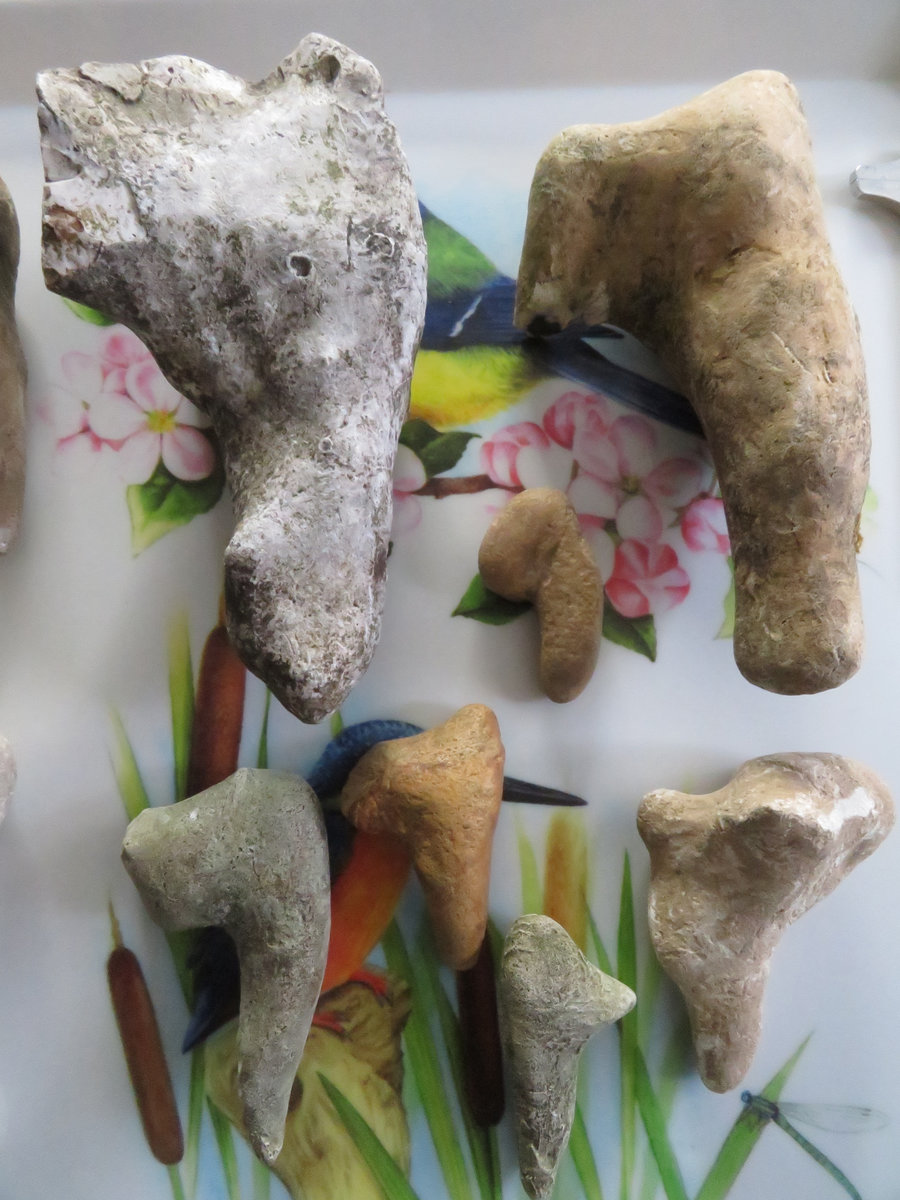
Large, irregular flint nodules of complex random shape are uncommon. The nodules that do occur are overwhelmingly concentrated in a much narrower family of forms. Elephant-head forms occur repeatedly. Thumb forms occur repeatedly. Small rounded-ended bar forms and spherical nodules occur repeatedly.
This makes prehistoric selection a central part of the interpretation. The people using the site were selecting particular materials and particular forms before those objects entered the archaeological deposit.
Detailed natural forms imply extensive selection
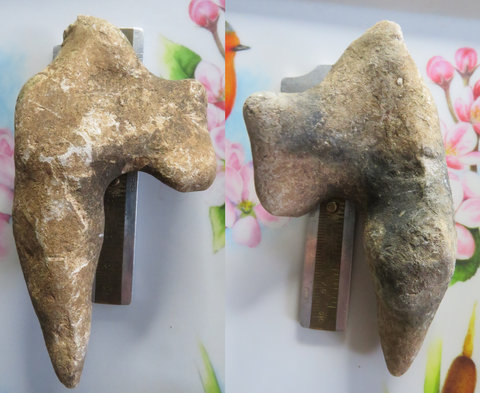
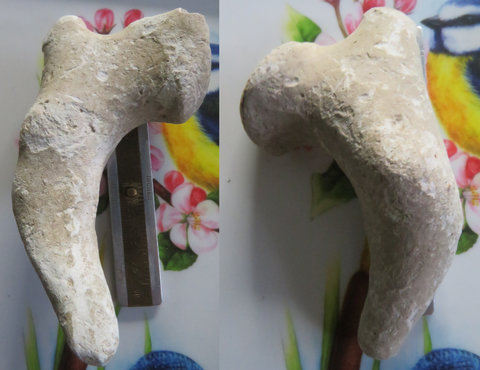
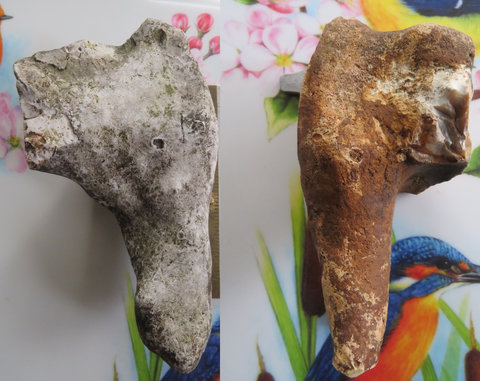
Some nodules contain more than a loose overall resemblance. Particular details occur in positions that correspond with the desired form: an eye, the line and placement of an ear, a trunk, the forehead, or a characteristic rise on the top of an elephant's head. Comparable details also occur in more extensively worked pieces.
A nodule with a generally useful outline is one level of selection. A nodule that combines that outline with several correctly positioned details represents a much narrower class of natural object. The increasing specificity of the form therefore points to selection from a much larger body of available material.
Natural fracture is capable of producing an enormous range of shapes, but it does not provide every imaginable representational outline in equal numbers. There is no population of simplified car-profile flint nodules at this site. Such a shape could exist somewhere by chance, but it is not one of the recurring forms observed here. By contrast, the repeated elephant, thumb and rounded forms are characteristic of this assemblage.
Because other commonly found items at the site need extraction, digging, or mining, this is the logical conclusion. Hematite for fire making, plate or tablet flint for anvils, tools and preforms, spherical nodules for napping, fortuitous creature like nodules for art, figuration or communication purposes.
Natural morphology and targeted modification
On a number of examples the natural nodule supplied most of the desired form, while particular removals altered the specific areas needed to strengthen it. An edge can be knocked away to clarify an outline; a small removal can establish an eye; a break can improve a trunk, forehead or ear; and material that interferes with the intended shape can be removed.
This creates a continuum from natural selection to manufacture:
- selected natural forms whose useful features were already present;
- manuports transported without obvious modification;
- minimally modified nodules in which a few targeted removals strengthen an existing form;
- extensively worked artifacts in which the same conventions are created more fully by reduction.
Selection is therefore not merely a preliminary event before manufacture. It can replace a substantial part of manufacture. Choosing a rare nodule whose natural morphology already supplies the required form reduces the amount of shaping needed afterwards.
Selection as physical agency
The finished form can be understood as the result of three interacting factors: natural morphology, human selection and deliberate modification. Human agency is visible not only in the flakes removed from an object, but in the decision about which object was chosen and transported in the first place.
When a large quantity of naturally occurring stone is available and a rare piece is selected because its existing structure closely matches a desired form, selection performs physical work. Material that would otherwise have to be removed by knapping has effectively already been eliminated through the choice of nodule.
The archaeological act is therefore not always the manufacture of a shape from an indifferent block of stone. Sometimes it is the recognition of a shape that nature has already largely produced, followed by transport, preservation and only as much modification as the selected object requires.
Elephant-head stills from the manuports study
The still images below accompany the video and provide close views of selected elephant-head nodules discussed in relation to natural form, recurring detail and minimal modification. Select any image to enlarge it; use the arrow keys or on-screen controls to move through the set.
The assemblage matters more than a single stone
A single irregular stone can invite subjective interpretation. That is not the argument presented here. The archaeological interest comes from repetition and association: the same classes of natural shape recur, ordinary random nodules are comparatively scarce, worked objects follow related conventions, and other selected geological materials are present at the same site.
The useful question is therefore not merely, “Does this stone look like an elephant?” It is: why does a prehistoric site containing worked elephant forms, thumb forms, tools and selected natural materials also contain a restricted population of natural flint nodules dominated by those same kinds of shapes?
The pattern documented here is one of selection. The remaining research questions concern what properties were being selected, how the natural forms relate to the worked objects, and what those choices reveal about prehistoric engagement with stone.
Terminology used on this page
This page uses a deliberately narrow vocabulary so that the subject remains distinct from the broader themes covered elsewhere on Eoliths.org.
- Manuport: a naturally formed object transported by people, with no necessary implication that it was manufactured.
- Selected flint nodule: a natural flint form identified as having been deliberately chosen from a wider source population.
- Minimally modified natural form: a selected nodule in which limited removals or other interventions strengthen an existing shape.
- Flint creature: descriptive language used here for recurring animal-like forms, especially the elephant-head group.
Related work on Eoliths.org
This page concentrates specifically on manuports and selected natural flint forms. Broader discussions of lithic technology, dating, geology and the site's wider assemblage are kept on their existing pages so each page can retain a clear subject.
- Flint Tools — worked lithic technology and tool forms.
- Science — geology, patina, analytical methods and dating discussions.
- Gallery — visual material from the wider assemblage.
- Eoliths and Tertiary Tools Atlas — historical comparative material.
- Revelation in Stone Video Series — the wider video project.