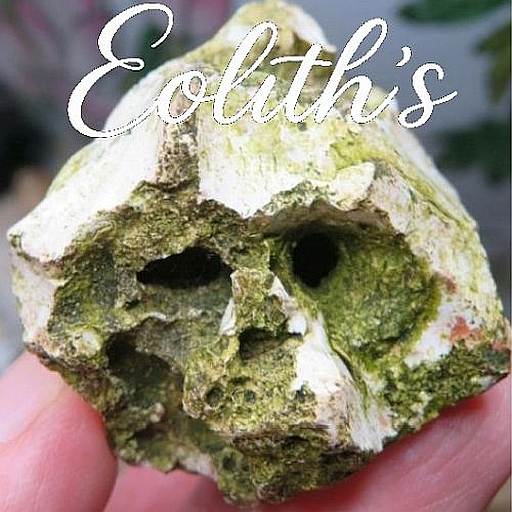
Key Terms (how this page uses them)
- Portable Rock Art: A stone selected and/or modified to convey a motif (image logic), often co-occurring with tools.
- Figure Stone / Pierre Figurée: A historical label for figurative stones; here treated as a subset of portable rock art.
- Mimetolith (nature-mimic): An accidental resemblance produced by natural processes.
- Stacked Constraints: A falsifiable framework: multiple independent filters that reduce chance explanations.
What Counts as Portable Rock Art?
“Portable rock art” is used here as the umbrella term for selected or modified stones that carry recurring motifs. The historical term pierres figurées (Boucher de Perthes) is retained because it captures the same phenomenon in the early literature, but the analytical question is modern: is there evidence of agency beyond resemblance?
In practice, candidates fall into three operational categories:
- Type A: Selection (Manuports). A nodule is selected because it already presents a stable motif in a natural orientation. (Prehistorically selected)
- Type B: Reinforced/Modified. Minimal knapping/retouch or pigment use anchors key features (e.g., eye-orbit, jaw hinge).
- Type C: Constructed. Deliberate flake removals shape form primarily for image logic rather than tool function alone.
The Two Main Pitfalls: Natural Mimics & Pareidolia
Skeptics correctly highlight two problems. First, flint breaks naturally: wave action, frost, pressure, and collision can create convincing pseudo-edges and silhouettes. Second, humans are pattern-detection machines: pareidolia makes “faces” inevitable in large sample sizes.
Therefore, resemblance is treated as a starting signal—not a conclusion. The method below is designed to be conservative: it attempts to falsify image-claims by demanding independent constraints.
Method: “Stacked Constraints” (Agency as Probability)
A “constraint” is a requirement that reduces chance explanations. When several constraints converge on one specimen, the probability that it is a mere product of chaos drops sharply.
On this site, “stacked constraints” is grounded in lithic fracture mechanics first (tool logic), and then extended to image logic because representational readings attract a distinct objection (pareidolia). In image logic, constraints are additional filters applied after mechanical grounding. For fracture mechanics context see: Flint Flake Mechanics: Stacked Constraints and the Probability of Agency
- Constraint 1: Repeatability (Topology). Do the same motif-templates recur across a coherent assemblage?
- Constraint 2: Technical Grounding. Are decisive features anchored in readable agency effects (flake scars, edge-management, pigment localisation)?
- Constraint 3: Anatomical Consistency. Does the reading remain coherent (proportions/relationships) across specimens of the same template?
- Constraint 4: Natural Orientation & Hand-fit. Does the motif present stably without forced rotation or “hunting” angles?
- Constraint 5: Assemblage Context. Is it embedded among consistent tools/debitage with shared patina/weathering history?
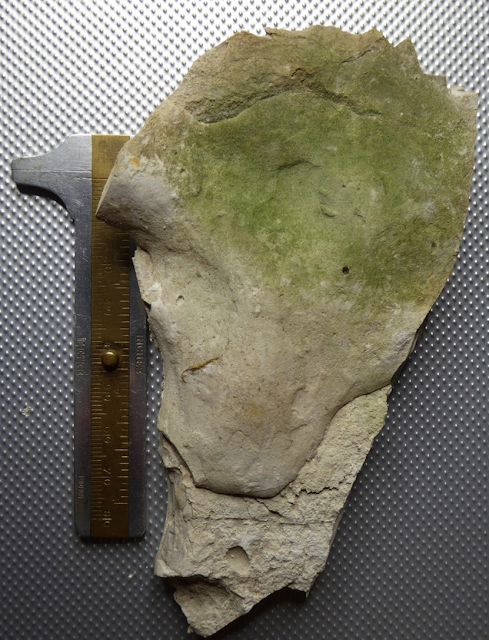
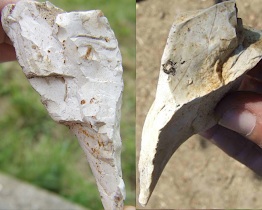
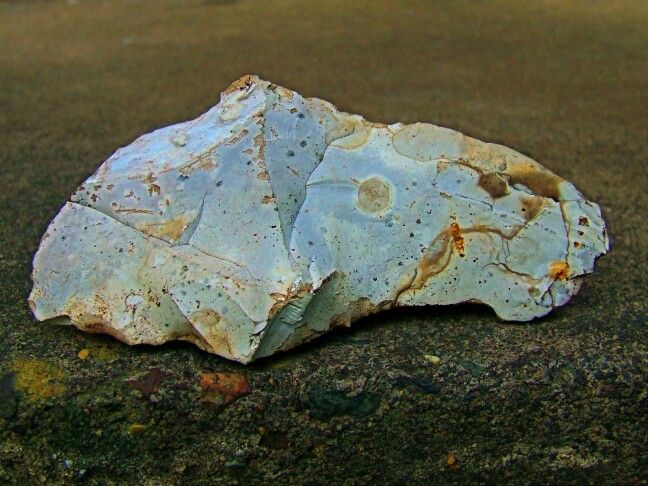
Worked Examples (click to inspect)
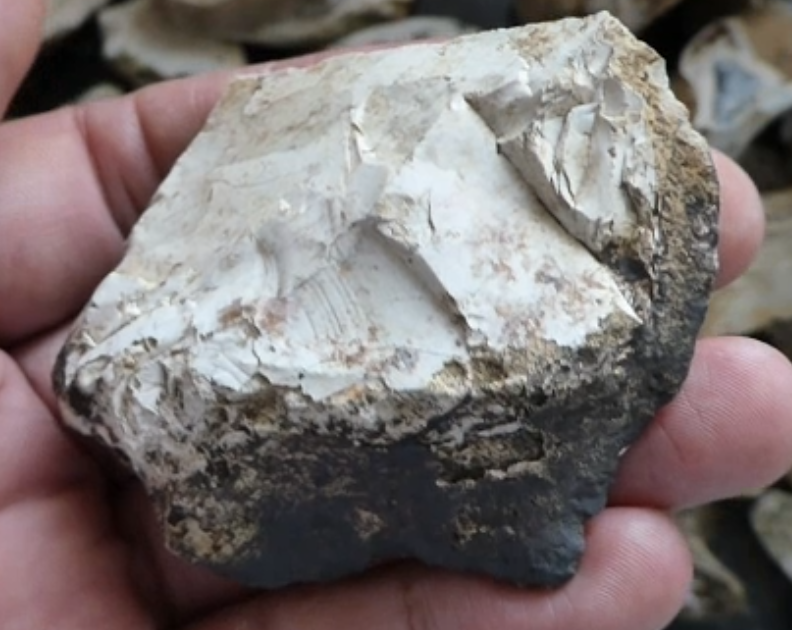
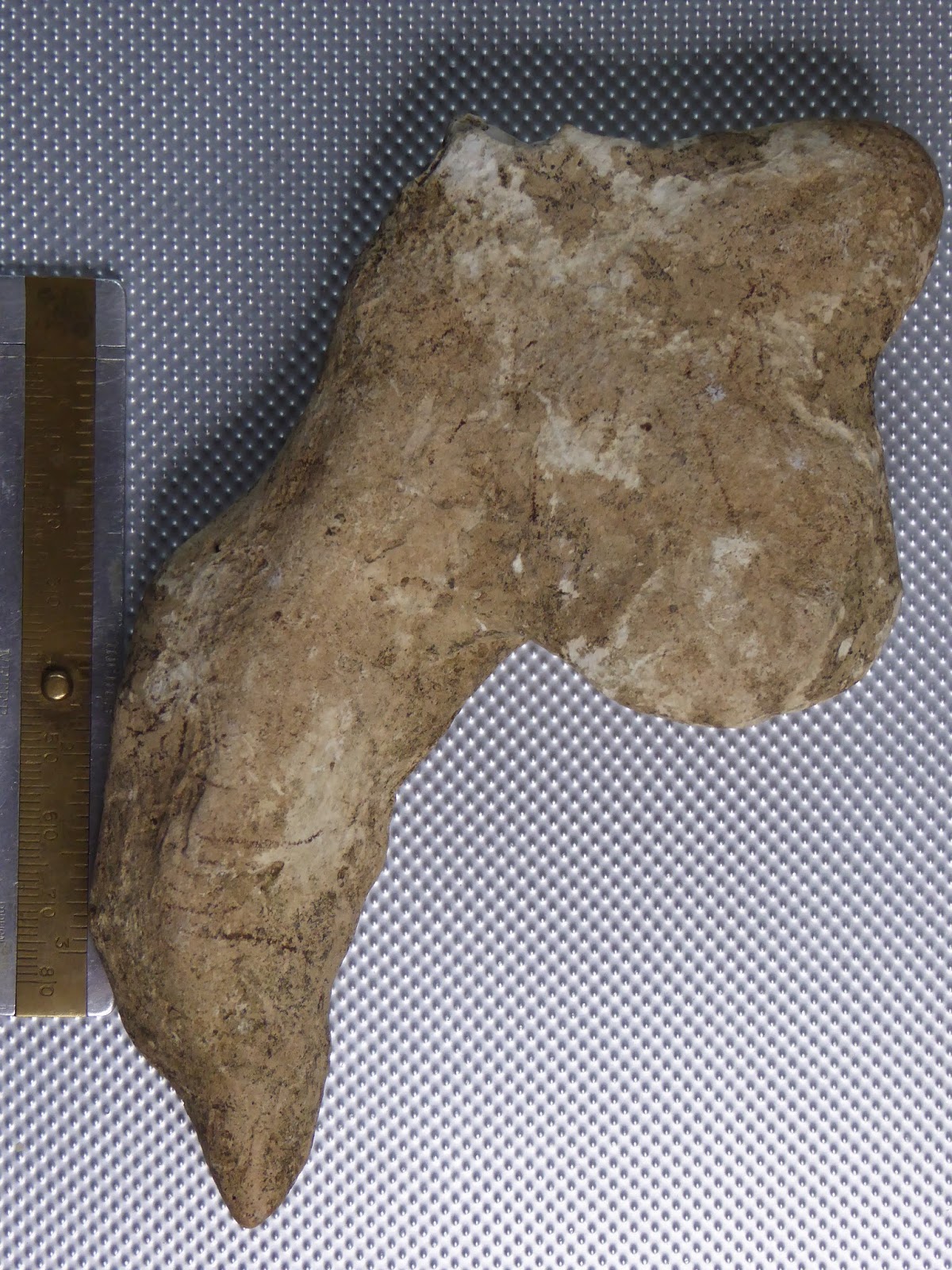
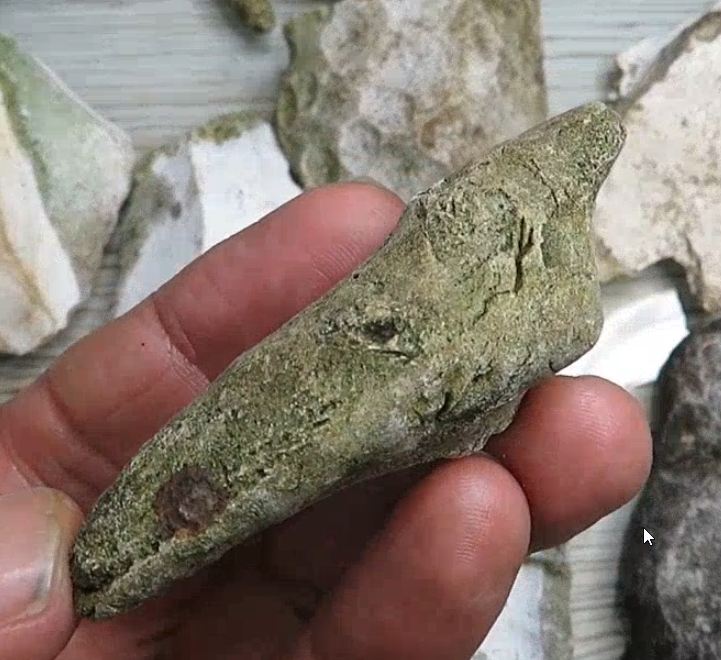
The examples below are presented as worked cases for the method. For the wider set of finds (more specimens, cross-links, and searchable IDs), use the dedicated database page: Portable Rock Art Gallery (searchable assemblage).
Implications for Cognitive Evolution
If the South Downs assemblage is accepted as Pierres Figurées, the timeline of human cognition shifts. Standard models place the "Symbolic Explosion" (art, jewellery) in the Upper Palaeolithic (approx. 40,000 years ago). However, the evidence of Image Logic—the ability to visualize, select, and replicate external forms—appears much earlier here.
The bridge between tool and art is the Ovate Handaxe. As detailed in my research, the geometric parameters of Boxgrove ovates overlap almost perfectly with avian eggs (Goose, Emu). This is not accidental ergonomics; it is Functional Mimesis. The maker is not just knapping a cutting edge; they are materially reproducing a nutritional archetype.
If early humans could model stone on the "Egg" (Food), they could model it on the "Lion" (Danger) or the "Horse" (Prey). The figure stone is not a leap from the tool; it is the inevitable result of a mind that already models the world in stone. This is not a "late" invention, but a foundational cognitive trait. See: Ovate Handaxe and the Symbolism of the EggWhat is the difference between portable rock art and a “figure stone”?
Portable rock art is the umbrella term used here for motif-bearing stones that are selected and/or modified. Figure stone (or pierre figurée) is the historical label for a similar subset in early literature. This page treats “figure stones” as a category within portable rock art, assessed by the same constraints.
Is pareidolia the same as apophenia?
They are related. Apophenia is a general tendency to see patterns in noise; pareidolia is the visual subtype (faces/animals). The method here filters pareidolia by demanding independent constraints beyond resemblance. For a full discussion, see Pareidolia: testing figure stones in depth.
Where can I see more specimens and IDs?
Use the database-style page: Portable Rock Art Gallery (searchable assemblage). This methodology page stays focused on definitions, criteria, and worked examples.
How can I submit a find for analysis?
You can email images for a basic visual appraisal (e.g., “does this show agency?”). Without physical handling, any assessment is provisional.